 Hakan Çelik
namespace['attr'] = 1
namespace[‘attr’] = 1
In the previous post we built the namespace manually as a plain dict. This time we are reproducing more accurately what Python actually does when it processes a class statement:
import textwrap

class Example:
	attr = 1

	def method(self):
		return "method"

name = "Example"
bases = ()
namespace = type.__prepare__(name, bases)  # >>> {}, default is dict()
# namespace["attr"] = 1
# namespace["method"] = lambda self: "method"

body = textwrap.dedent(
	"""\
	attr = 1

	def method(self):
		return "method"
	"""
)

exec(body, globals(), namespace)
Example = type(name, bases, namespace)  # type: ignore

print(f"{Example.__class__=}")     # <class 'type'>
print(f"{Example().attr=}")        # 1
print(f"{Example().method()=}")    # 'method'

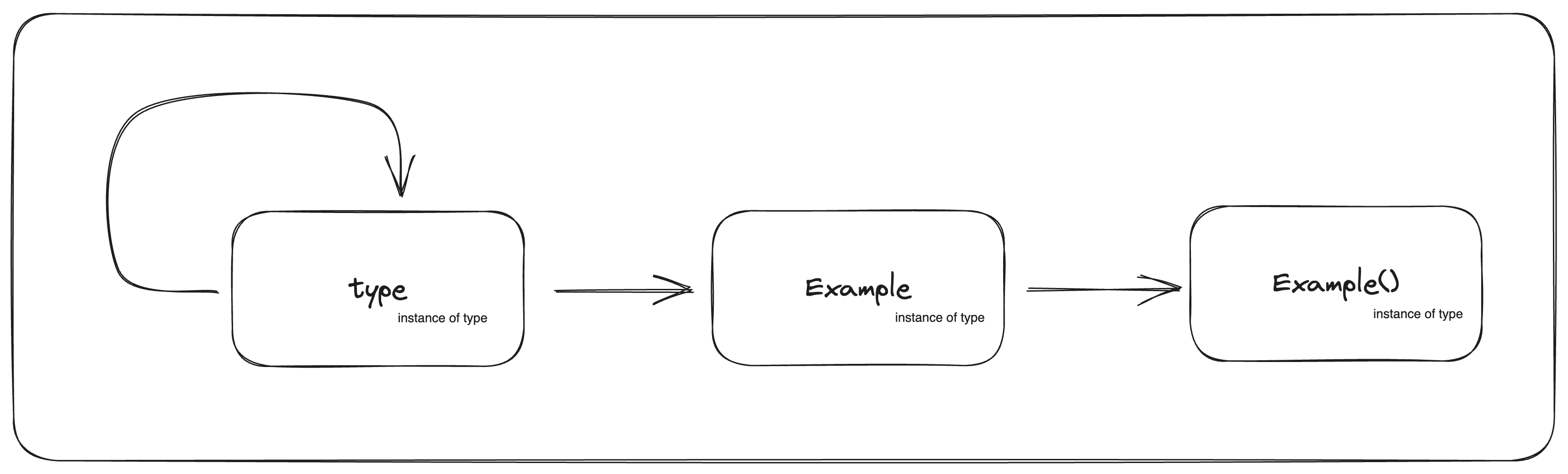
assert isinstance(Example, type)
assert isinstance(Example(), Example)
Three Steps
1. type.__prepare__(name, bases) Returns an empty dict — this namespace will hold all assignments written inside the class body. A custom metaclass can override this step and return something other than a plain dict (see the Logging Namespace post).
2. exec(body, globals(), namespace) Takes the class body as a string and runs it into the namespace dict. This is the exact counterpart of what Python does while processing a class block. Once exec finishes, namespace contains:
{
    'attr': 1,
    'method': <function method at ...>,
    '__module__': '__main__',
    '__qualname__': 'Example',
}
3. type(name, bases, namespace) Creates the class from the populated namespace. The result is identical to writing class Example: ....
Why Does This Matter?
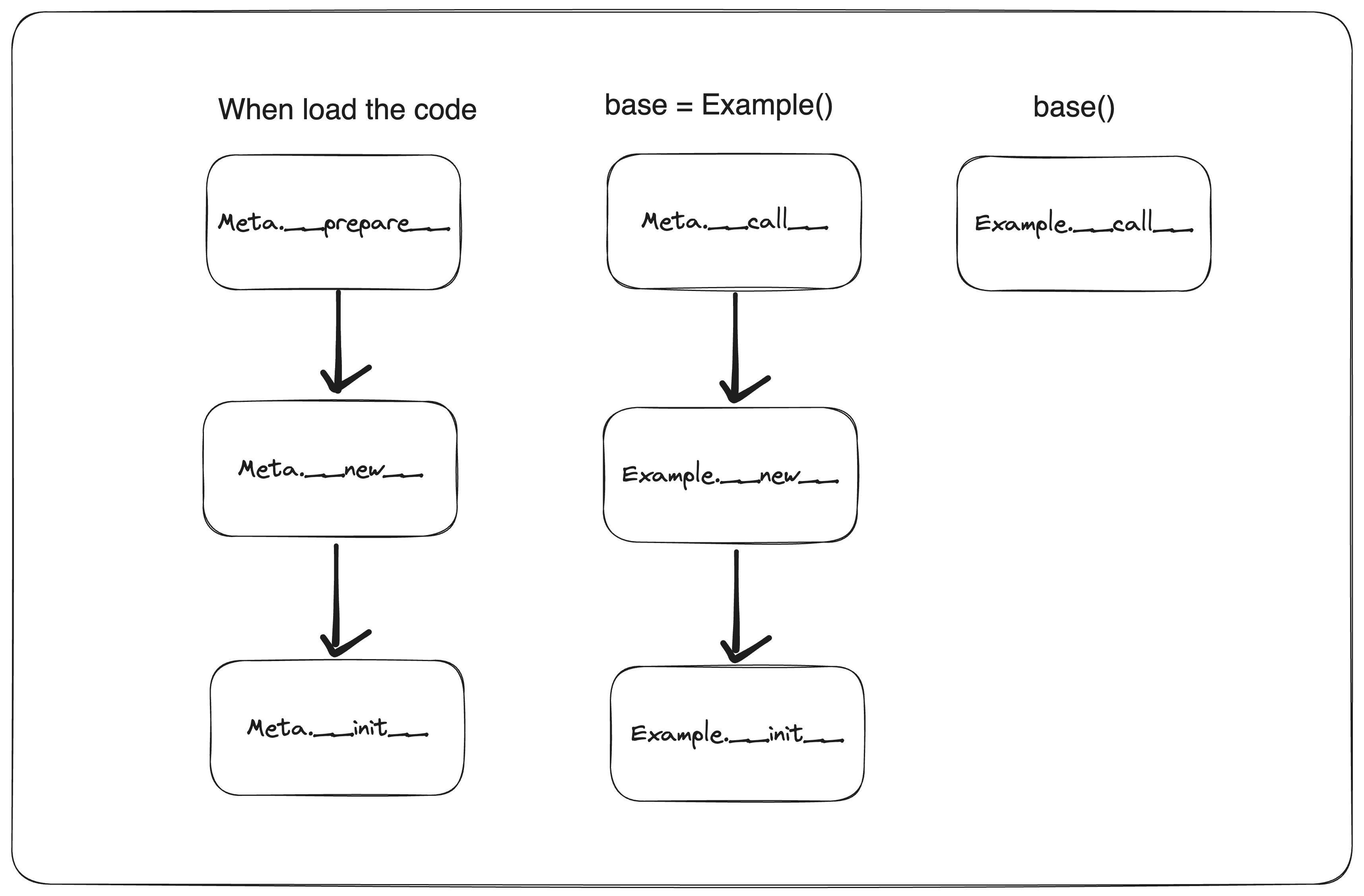
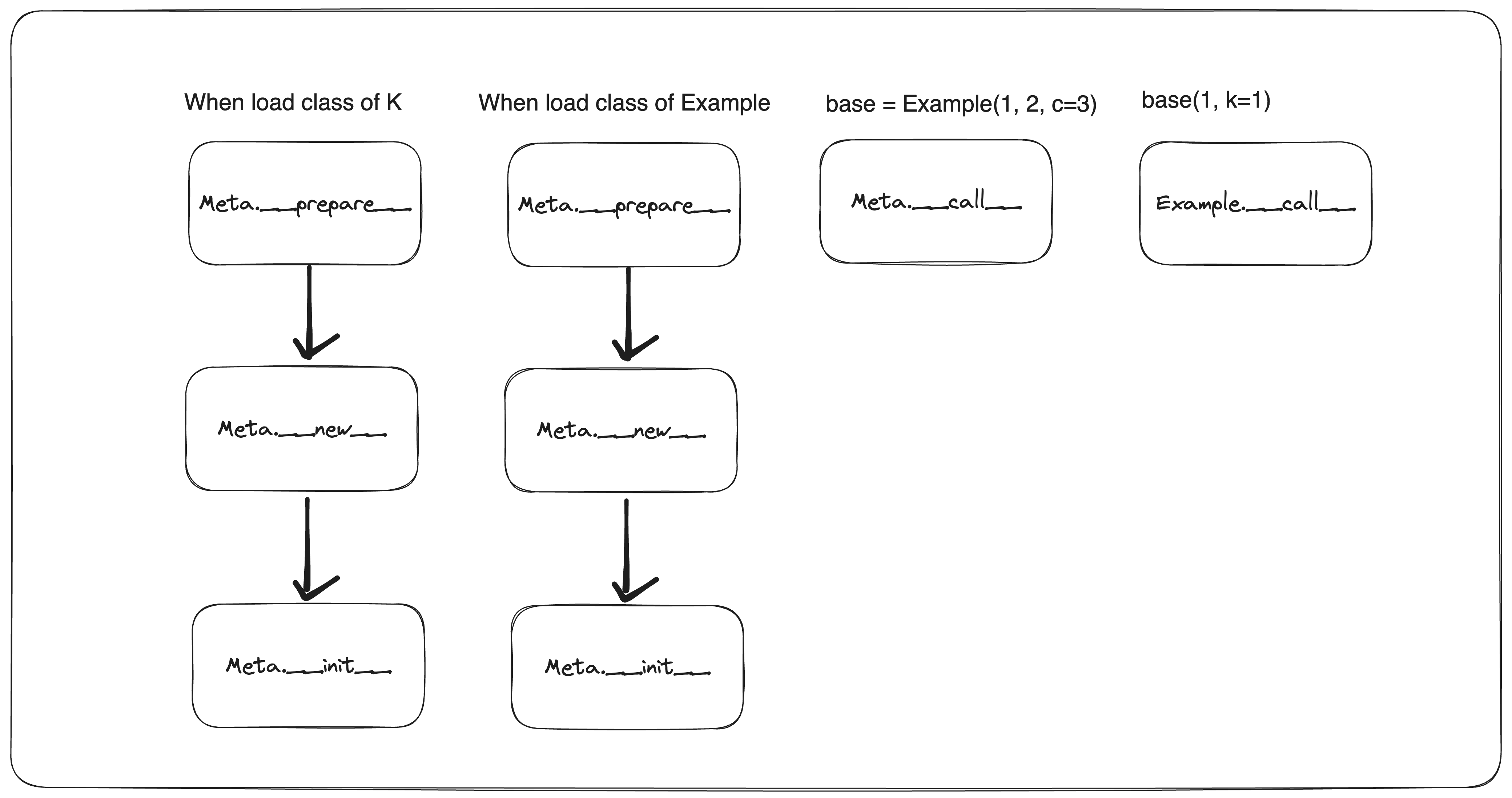
When you write a custom metaclass, the __prepare__, __new__, and __init__ methods correspond exactly to these three steps. While Python hides this process from you, this example lets you see “behind the curtain”.