 Hakan Çelik
Singleton in Python

Singleton in Python
Singleton is a design pattern that guarantees only a single instance is created from a class. In Python it is possible to implement this through the __call__ method on a metaclass. Below, two different implementations are compared — both work, but their behaviors differ significantly:
class Meta(type):
    instance = {}

    def __call__(cls, *args, **kwargs):
        if cls not in cls.instance:
            cls.instance[cls] = super().__call__(*args, **kwargs)

        return cls.instance[cls]

class Singleton(metaclass=Meta):
    pass

class Example(Singleton):
    pass

class Example2(Singleton):
    pass

assert Example is not Example2
assert Singleton is not Example
assert Singleton is not Example2

assert Singleton() is Singleton()
assert Example() is Example()
assert Example2() is Example2()

assert Example() is not Example2()

# --------

class Meta(type):
    instance = {}

    def __new__(mcs, *args, **kwargs):
        if not hasattr(mcs, 'obj'):
            mcs.obj = super().__new__(mcs, *args, **kwargs)
        return mcs.obj

    def __call__(cls, *args, **kwargs):
        if cls not in cls.instance:
            cls.instance[cls] = super().__call__(*args, **kwargs)

        return cls.instance[cls]

class Singleton(metaclass=Meta):
    pass

class Example(Singleton):
    pass

class Example2(Singleton):
    pass

assert Example is Example2
assert Singleton is Example
assert Singleton is Example2

assert Singleton() is Singleton()
assert Example() is Example()
assert Example2() is Example2()

assert Example() is Example2()
Approach 1: Only __call__
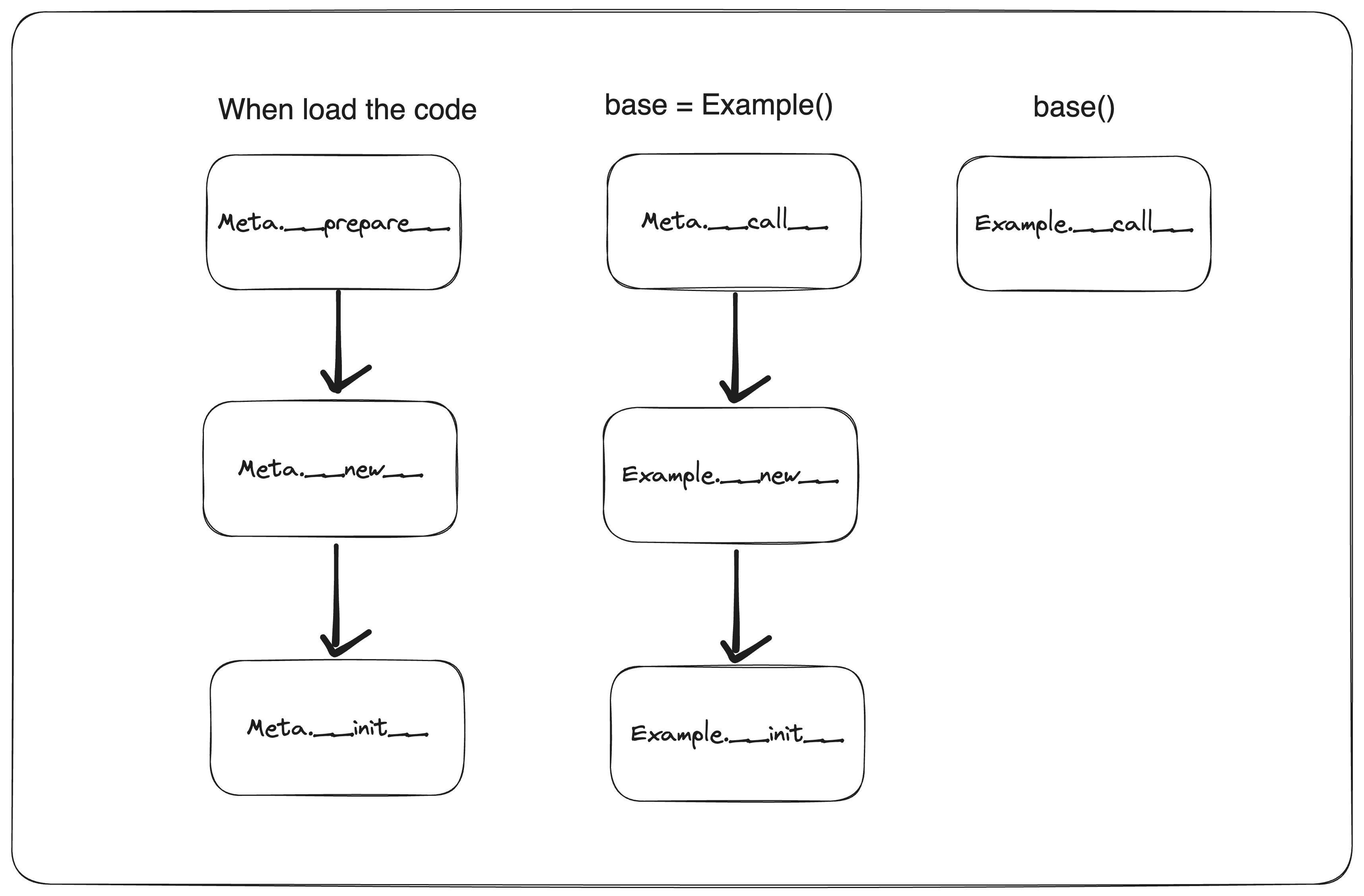
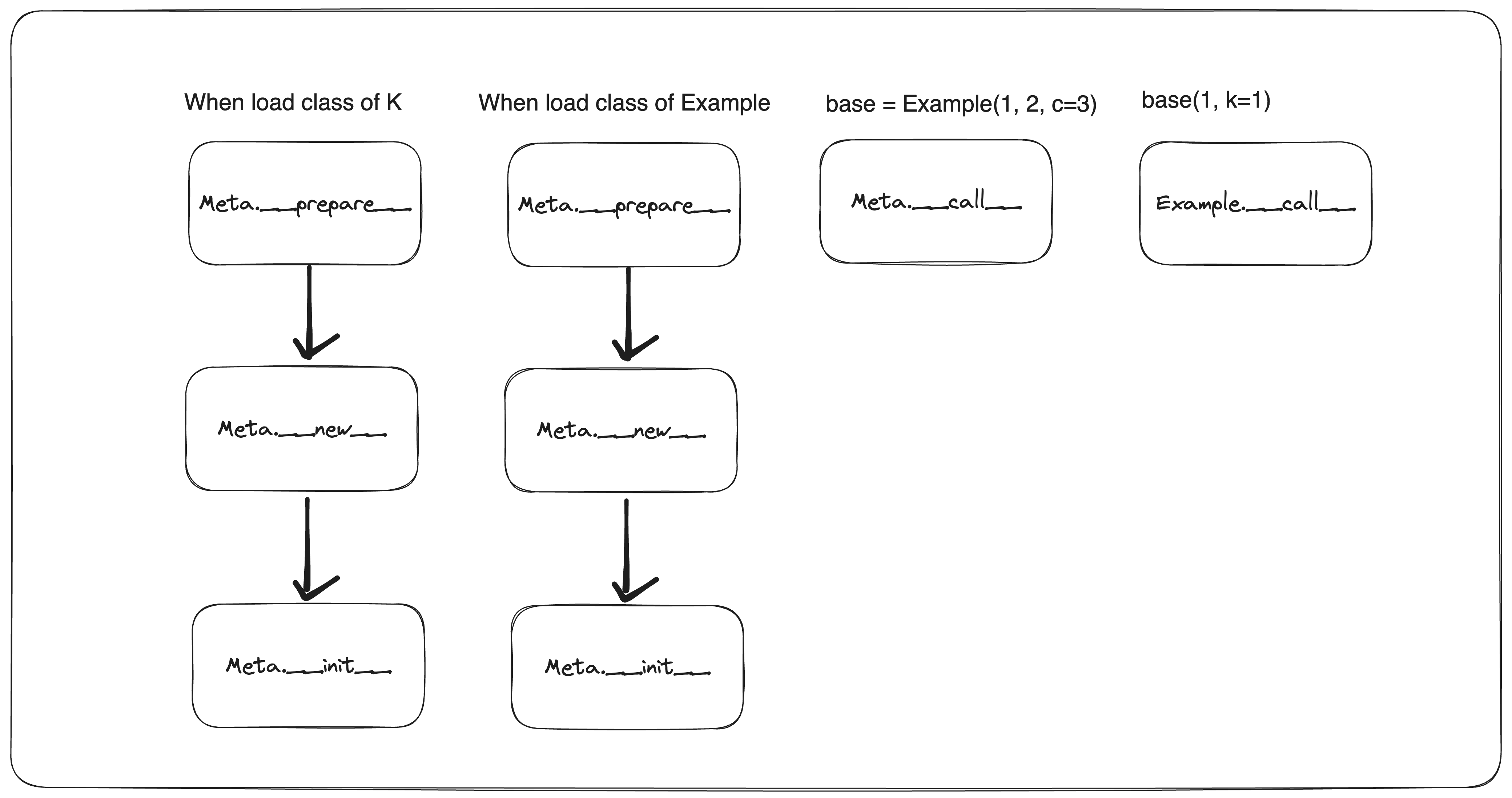
Meta.__call__ kicks in every time a class is called. The instance dict uses the class as a key: on the first call the instance is created, and on subsequent calls the same instance is returned.
Result: Each class is a separate object (Example is not Example2), but each has its own singleton. Example() and Example2() return different instances.
Approach 2: __new__ + __call__
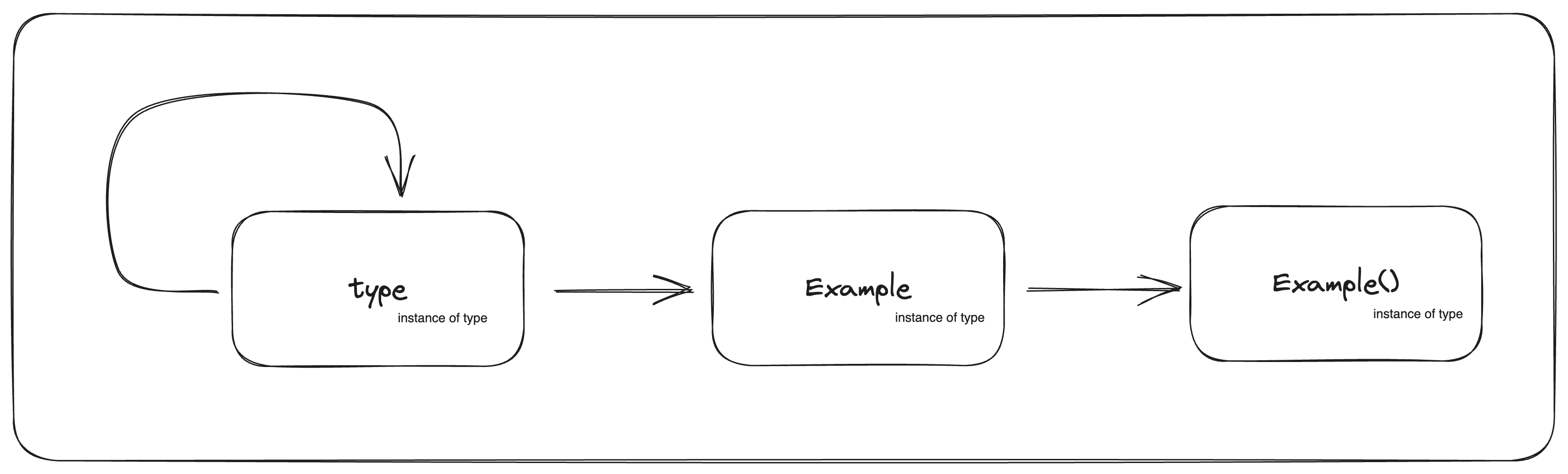
Meta.__new__ runs for every class created through a metaclass (not for instances). With the condition if not hasattr(mcs, 'obj'), whichever class is first created through Meta is stored as mcs.obj; every subsequent type.__new__ call returns that same object.
Result: Singleton, Example, and Example2 are the same object (assert Example is Example2). Consequently Example() and Example2() also return the same instance.
Critical Difference
| Approach 1 | Approach 2 | |
|---|---|---|
Example is Example2 | False — different classes | True — same object |
Example() is Example2() | False — different instances | True — same instance |
| Use case | Separate singleton per class | Single singleton for the whole hierarchy |
For most Singleton needs, Approach 1 gives the expected behavior. Approach 2 is a great example for understanding the __new__ mechanism of metaclasses.